Description
Basic principle of C-99 Racing
- Improves the octane rating:
- Increases combustion speed:
- Increases oxidation speed
- Increases flame front speed
- Improves fuel ignition inside the combustion chamber
- Atomizes the fuel (nebulization).
- Speeds up the hydrocarbon/oxygen mixture.
Total safety in your fuel quality
- C 99 is a catalyst: it speeds up the air/gasoline mixture, gives perfect homogeneity at both low and very high revs, and increases flame front speed exceptionally.
- C 99 Racing finally lets you get more out of your engine at low revs, for example when exiting a corner, and delivers much faster acceleration in every gear and at every rev range. C 99 considerably reduces unburned fuel, exhaust gas temperature and the blowtorch effect, as well as flames and backfires in the exhaust pipe.
- We recommend starting with 10 ml of C 99 Racing per 10 liters of gasoline and increasing 5 ml at a time without exceeding 20 ml. Adjust your mixture and ignition timing according to the results, or lower the amount of C 99 Racing if the engine does not allow it.
- C 99 Racing is intended for competition use only. In endurance races, a 20% drop in consumption is regularly observed, explained by the factors described above. Your money produces more energy instead of going up in smoke.
Improves the octane rating: A racing fuel must be optimal in octane rating, air/fuel mixing speed, oxidation and combustion speed. The octane rating indicates the fuel's ability to resist knocking. When the octane rating is insufficient for the engine's compression ratio, self-ignition occurs with a knocking noise, resulting in loss of performance and engine damage.
Increases combustion speed: Once the combustion or explosion speed exceeds 330 m/s, the fuel can deliver its full power. The faster an engine spins, the more we face the challenge of achieving the fastest possible deflagration. The pressure of the deflagration or explosion must occur after top dead center, depending on the engine setup. If the fuel is still burning, the exhaust gas temperature rises. The fuel keeps burning in the exhaust pipe (flames and backfires), with a blowtorch effect that can melt the valve stems and wreck the engine!
Oxidation speed: Combustion speed is determined mainly by the density of the fuel mixture. The faster oxidation occurs as the fuel contacts the oxygen, which makes up 21% of air, the better the combustion, that is, the explosion.


 C-Fuel
₡34.600 VAT included
 Eco 10 000 Gasolina
₡27.300 VAT included
 P-18 Antifricción
Price range: ₡19.400 through ₡50.300 VAT included
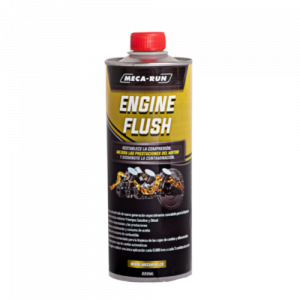 Engine Flush
₡27.800 VAT included
 C-99 Gasolina
Price range: ₡3.100 through ₡32.800 VAT included
 C-99 Diésel
Price range: ₡3.100 through ₡32.800 VAT included
 C-99 Racing
Price range: ₡4.800 through ₡35.200 VAT included
 Eco 10 000 Diésel
₡27.300 VAT included
 Español


Reviews
There are no reviews yet.